
Magnesium Guide: Which Type of Magnesium Does What?
Magnesium is EVERYWHERE lately — sleep supplements, hydration drinks, powders, gummies, sprays... you name it.
But did you know there are actually many different forms of magnesium — and they don't all do the same thing?
The lines can get a little blurred between what actually makes sense for what you're trying to accomplish... and what's just hype.
Some are used for relaxation + nighttime routines. Some show up in hydration drinks. Some are used for digestion. And spoiler: some are literally used as laxatives. 👀
So here's your simple guide to what that little word after “magnesium” actually means.
Magnesium Chloride
Best known for: Relaxation, muscle care + evening routines
Commonly found in: Magnesium sprays, magnesium “oil,” bath products + supplements
Good to know: Magnesium supports normal muscle + nerve function, and magnesium chloride is commonly used in topical magnesium products and evening routines.
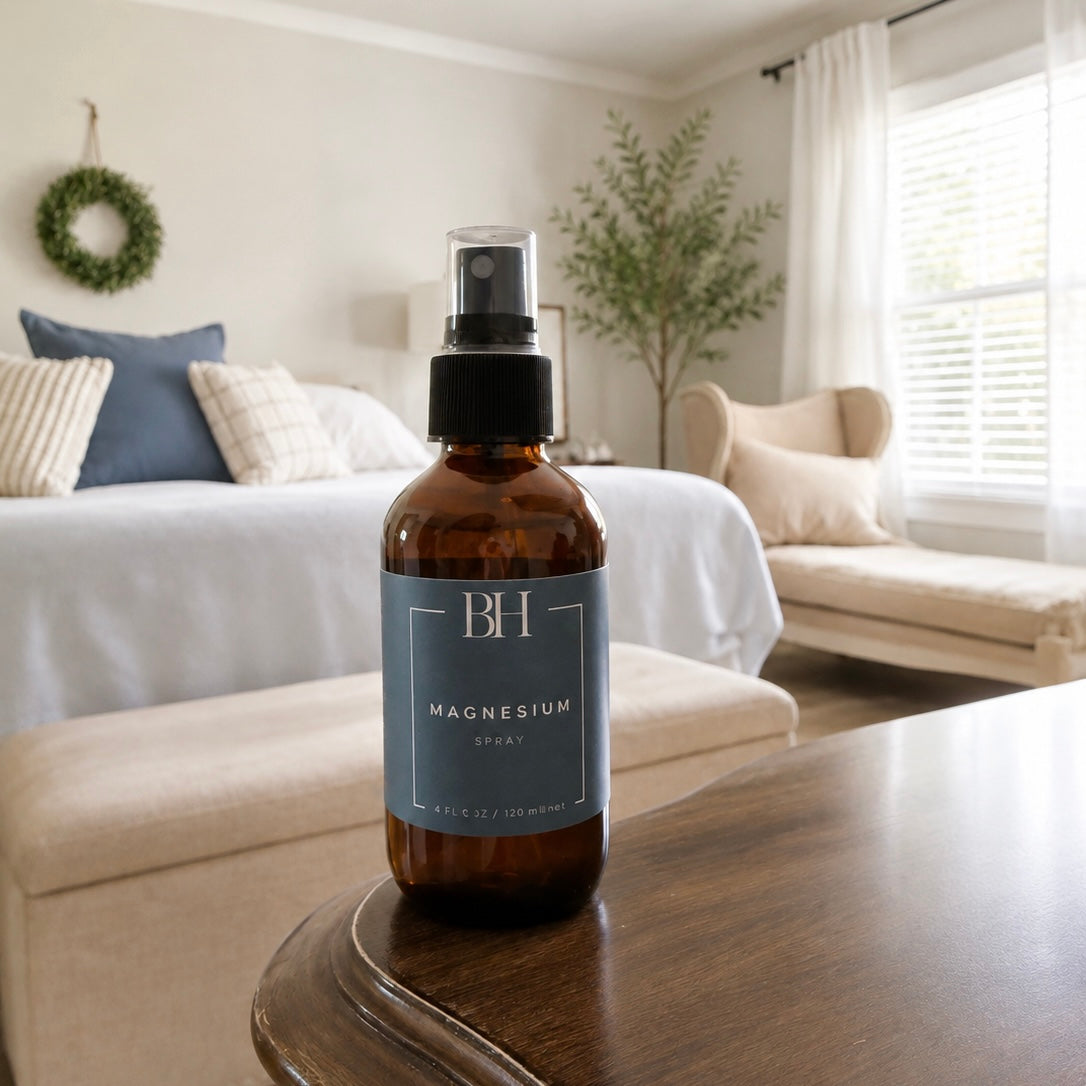
This is the form we use in our Bella Hue Magnesium Spray and one of the forms in our Magnesium Bath Salts.
Magnesium Sulfate
Best known for: Relaxing baths + post-workout soaks
Commonly found in: Epsom salt + bath products
Good to know: Here's a fun one — Epsom salt IS magnesium sulfate!
We combine magnesium sulfate (Epsom salt) with magnesium chloride in our Bella Hue Magnesium Bath Salts for an easy addition to your evening wind-down routine.
Magnesium Glycinate
Best known for: Oral magnesium supplementation + nighttime use
Commonly found in: Capsules, powders + nighttime supplements
Good to know: Generally well tolerated and popular for evening supplementation because it tends to have less of a laxative effect than some other forms.
Magnesium Citrate
Best known for: Supplementation + constipation
Commonly found in: Supplements, powders + some hydration/electrolyte drinks
Good to know: It's relatively well absorbed — but magnesium citrate is also used as a saline laxative at higher doses.
Sensitive stomach? If certain hydration drinks seem to bother you, check which form of magnesium they're using.Dose matters, but citrate can contribute to GI effects for some people.
Magnesium Oxide
Best known for: Inexpensive supplementation + digestive uses
Commonly found in: Supplements + some hydration/electrolyte products
Good to know: Generally not as well absorbed orally as several other forms and can cause digestive upset at higher doses.
Another one worth checking for if certain electrolyte products don't agree with your stomach.
Magnesium Hydroxide
Best known for: Odor control, constipation + antacid use
Commonly found in: Natural deodorants, Milk of Magnesia, laxatives + antacids
Good to know: This is actually the form of magnesium we use in our Bella Hue Deodorants! In deodorant, magnesium hydroxide helps control odor by creating an environment that's less favorable for odor-causing bacteria — without using aluminum to block sweat.
And here's another wait, what?! — Milk of Magnesia is magnesium hydroxide too.
Same ingredient. Completely different application depending on how it's formulated + used.
Magnesium Lactate
Best known for: General magnesium supplementation
Commonly found in: Supplements + fortified foods/beverages
Good to know: Considered a relatively well-absorbed oral form of magnesium.
Magnesium Carbonate
Best known for: Supplementation + antacid use
Commonly found in: Supplements, powders + digestive products
Good to know: It can have antacid and laxative effects depending on the dose.
Magnesium Malate
Best known for: Often marketed for energy + muscle support
Commonly found in: Energy, exercise + muscle-focused supplements
Good to know: Malic acid is involved in normal cellular energy production, which is why you'll often see this combination marketed for energy. Research on unique benefits of magnesium malate is still limited.
Magnesium L-Threonate
Best known for: Brain + cognitive health
Commonly found in: Memory, focus + premium brain supplements
Good to know: Sometimes called “brain magnesium.” There's interesting emerging research, but some of the claims you'll see online are still ahead of the science.
So... Which Magnesium Is Best?
There really isn't one “best” magnesium.
The better question is:
What are you actually using it for?
And if there's ONE thing I want you to remember from this guide, it's this:
Don't just read “MAGNESIUM.” Look at what comes AFTER it.
If a supplement makes your stomach hurt...
If one hydration drink agrees with you and another doesn't...
If you're looking for something to add to your evening routine...
Flip it over and look at the form AND the amount.
That little word after magnesium can tell you a whole lot more than the giant wellness claims on the front of the package.
Why You'll Find Different Forms of Magnesium at Bella Hue
This is actually a perfect example of why we don't treat “magnesium” as one ingredient that does one thing.
We use magnesium chloride in our Magnesium Spray for an easy addition to evening + muscle-care routines.
Our Magnesium Bath Salts combine magnesium chloride + magnesium sulfate (Epsom salt) for a relaxing evening soak.
And we use magnesium hydroxide in our Deodorants for a completely different reason — helping control odor without using aluminum to stop you from sweating.
Different forms. Different products. Different purposes.
And that's really the whole point.
This article is for general educational purposes only and isn't intended to diagnose, treat, cure or prevent any medical condition. If you're concerned about magnesium deficiency or considering supplementation — particularly if you have kidney disease or take medications — talk with your healthcare provider.


Leave a comment
This site is protected by hCaptcha and the hCaptcha Privacy Policy and Terms of Service apply.